
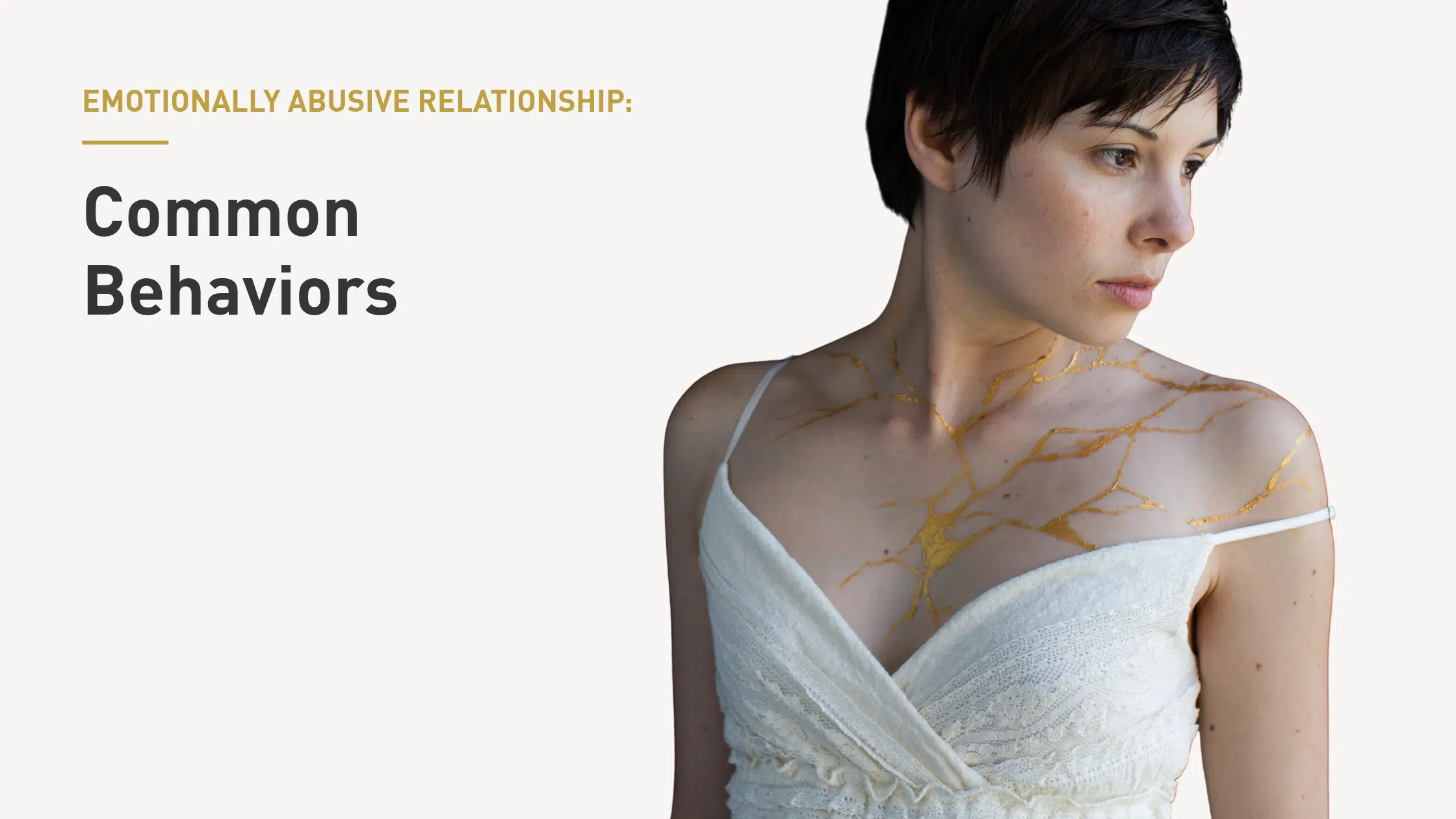
Abuse in relationships does not always begin with physical abuse or physical violence. Some abusive relationships are marked primarily by verbal abuse and psychological abuse, or emotional abuse.
Emotionally abusive behaviors can occur in romantic relationships, such as marriages or dating relationships, or in families, friendships, and in the workplace. This article focuses primarily on behaviors associated with intimate partner abuse. Recognizing the common behaviors in emotionally abusive relationships, including the more subtle signs and warning signs, can help bring clarity to patterns that are otherwise difficult to identify and explain.
Emotional Abuse: Common Behaviors to Watch For
Emotional abuse often involves a repeated pattern of behaviors that undermine another person's emotional safety, autonomy, confidence, or sense of reality. These behaviors are often used to gain control over the other person. They may occur alone or alongside verbal abuse, sexual abuse, economic abuse, or physical abuse. In some relationships, emotional and physical abuse occur together as part of a larger pattern of coercion and control.
The presence of one unhealthy behavior does not automatically make a relationship abusive. Patterns matter. In healthier relationships, people can make mistakes, hear concerns, take responsibility, apologize, and change their behavior. In abusive relationship patterns, harmful behavior repeatedly continues while responsibility is denied, minimized, or redirected.
1. Controlling Behavior and Isolation
Controlling behavior is one of the most common warning signs in an emotionally abusive relationship, a form of relationship abuse that often involves nonphysical behavior used by abusers to gain power or control over a victim.
It may include trying to control:
- Where you go
- Who you spend time with
- What you wear
- How you spend money
- Who you communicate with
- What you post online
These patterns can appear on their own or alongside different forms of harm, including sexual violence.
Isolation often happens alongside control. It might look like criticizing your friends or family, making constant accusations, becoming angry when you spend time with others, making social events uncomfortable, suggesting that nobody understands you the way they do, or threatening your loved ones.
In a healthy relationship, connection with other people is respected rather than restricted. If you have not seen healthier dynamics up close, it can be harder to spot red flags or set boundaries that you're willing to follow through on.
A partner’s bad mood or a mental health condition does not excuse abusive behavior or remove responsibility.
Over time, these behaviors can reduce access to emotional support and make a person increasingly dependent on the one causing harm. Isolation can become an effective way to gain control because it separates someone from people who may help them recognize abuse.
Emotional abuse is common, affecting over 50% of adults in their lifetime, and research from the Centers for Disease Control and Prevention and the U.S. Department of Health & Human Services Office on Women’s Health also points to differences in women’s experience, with younger men reporting higher levels than older men.
2. Extreme Jealousy and Monitoring
Jealousy becomes concerning when it is used to justify control, surveillance, accusations, or restrictions.
This may include:
- Checking your phone
- Reading your messages
- Tracking your location
- Demanding passwords
- Monitoring social media
- Repeatedly accusing you of flirting or cheating
You may begin changing ordinary behavior simply to avoid constant accusations or another argument. Abusers may also threaten your loved ones or use fear about family and friends to isolate the victim and gain power.
Over time, this kind of monitoring can affect and erode self-esteem, independence, and confidence in your decision-making abilities.
3. Love Bombing and Rapid Attachment
Some abusive romantic relationships begin with unusually intense attention, affection, gifts, praise, or rapid commitment. This is often called love bombing. It may include constant texting, excessive flattery, early talk of marriage, pressure to become exclusive quickly, or wanting to spend nearly all available time together.
Affection itself is not abusive. The warning sign is when intense attachment creates dependency or obligation and is later followed by control, criticism, withdrawal, or devaluation.
4. Verbal Abuse, Criticism, and Belittling
Verbal abuse can be a central part of emotional and psychological abuse.
It may include:
- Name-calling
- Yelling
- Insults
- Mocking
- Humiliation
- Threats
- Degrading comments
- Constant criticism
- Put downs
Verbal abuse can also be subtle. Sarcasm, repeated correction, hostile jokes, eye rolls, or comments designed to make you feel incompetent can slowly erode self-esteem and create lasting emotional pain.
In healthy relationships, you can discuss criticism and repair it.
Repeated language that humiliates, frightens, or diminishes another person is different. When early red flags appear during love bombing, it is important to set boundaries rather than dismiss discomfort.
5. Blame-Shifting and Minimization
Blame-shifting happens when someone avoids responsibility by redirecting negative attention toward you, and a bad mood does not excuse abusive behavior.
You may raise a concern and hear:
- "You made me do it."
- "You started it."
- "You're too sensitive."
- "If you hadn't pushed me, I wouldn't have reacted that way."
- Constant criticism or put-downs framed as your fault.
Suddenly, you are no longer discussing the original behavior. You are defending yourself. Minimization often works the same way. Statements such as "You're making a big deal out of nothing" or "It wasn't that serious" can repeatedly communicate that your feelings or experiences do not deserve consideration. For someone experiencing emotional abuse, repeated blame-shifting and minimization can make it harder to recognize the larger pattern because attention is constantly redirected away from the behavior causing harm, even though responsibility still lies with the person choosing it.
6. Gaslighting and Reality Distortion
Gaslighting is a common form of psychological abuse. It involves repeatedly denying, distorting, or rewriting events in ways that cause another person to question their own memory or perception and helps the other person gain power.
It may include:
- Denying conversations happened
- Insisting events unfolded differently
- Changing details when confronted
- Claiming you said or did things you do not remember
- Telling you that others think you are irrational or unstable
A difficult childhood or a bad mood does not excuse abusive behavior, and responsibility still belongs to the abuser, not a partner’s mental health condition.
You may begin wondering whether you remembered something incorrectly or whether you are the problem. Simple disagreement is not gaslighting. The concern is a repeated pattern that causes one person to distrust their own reality. Over time, this can affect mental health, self-confidence, and the ability to trust your own memories or perceptions.
7. Withholding, Silent Treatment, and Stonewalling
Withholding occurs when someone denies or refuses affection, attention, communication, or emotional connection to punish or control. The silent treatment is one example. This is different from a healthy pause during conflict. A healthy break is communicated clearly and includes an intention to return to the conversation at a specific time. Abusive withholding may continue until the other person apologizes for something they aren't responsible for, gives in, or stops raising the issue. Abusive withholding does not include when the one being harmed places a boundary to limit emotional or physical connection as a way to create safety and space or to set boundaries.
Stonewalling can also occur when someone repeatedly refuses to discuss concerns, changes the subject, or shuts conversations down or sabotages them before anything is resolved.
Repeatedly withholding connection can create significant emotional pain and may cause the other person to stop expressing their needs or concerns altogether. Repeated stonewalling can also help abusers gain power by controlling the narrative in disagreements, leaving the victim confused and alone.
8. Intimidation, Threats, and Property Damage
Intimidation is an important warning sign, even when direct physical violence has not occurred.
It may include:
- Blocking doorways
- Standing over you
- Punching walls
- Throwing objects
- Slamming doors
- Driving recklessly
- Using physical size or volume to frighten you
Threats may involve harming you, themselves, children, pets, property, finances, or your reputation. Property destruction may also communicate the possibility of future physical abuse. These behaviors can create fear without physical contact. In some abusive relationships, intimidation is part of a broader pattern of emotional and physical abuse.
9. Sexual Abuse and Sexual Coercion
Sexual abuse can occur in marriages, dating relationships, and other romantic relationships.
Sexual coercion may include:
- Pressuring someone after they say no
- Repeatedly asking until they give in
- Using guilt to obtain sex
- Becoming angry when sex is declined
- Suggesting someone "owes" sex
- Ignoring sexual boundaries
- Frequently rejecting the victim's advances
Consent is not created through pressure, fear, guilt, punishment, or exhaustion.
Sexual abuse may occur alongside emotional abuse, psychological abuse, verbal abuse, or physical abuse.
10. Economic Control
Money can also limit another person's independence and help someone gain control.
Economic abuse, also known as financial abuse, may include:
- Restricting access to bank accounts
- Monitoring every purchase
- Preventing someone from working
- Taking another person's earnings
- Creating debt in their name
- Refusing access to shared financial information
Financial control can make it feel more difficult for someone to exercise autonomy or leave an abusive relationship. The truth is you are never stuck, and there are organizations that exist to help women in these situations, such as local domestic violence agencies. The Domestic Violence Hotline is also a great resource for any victim of emotional abuse, psychological abuse, verbal abuse, sexual abuse, sexual violence, or physical abuse.
Subtle Signs of Emotional and Psychological Abuse
Some warning signs are not obvious at first.
You may notice that:
- You frequently feel confused after conversations
- You apologize without knowing exactly what you did wrong
- You wonder whether you are too sensitive
- You carefully choose your words to avoid conflict
- You have changed your friendships, interests, or personality to keep the peace
- You increasingly doubt your own memory or judgment
- Your self-esteem has gradually declined
- You avoid raising concerns because you expect an argument, punishment, or withdrawal.
- You feel increasingly cut off from sources of emotional support
These subtle signs of emotional and psychological abuse can be easier to recognize when you look at the pattern rather than one isolated interaction and how you gradually have changed yourself to accommodate them. People experiencing various forms of emotional abuse may also notice changes in their mental health, including increased anxiety, confusion, stress, depression, emotional exhaustion, or difficulty concentrating. If you are trying to make sense of what is happening, documenting abusive behavior can help you see the patterns. It can help a victim when seeking legal protection or outside support.
Warning Signs That the Pattern May Be Abusive
Every relationship includes misunderstandings and mistakes. The key question is whether an ongoing pattern of control, punishment, silencing, or refusal to take accountability exists. In a healthy relationship, repair is quick to follow.
Warning signs may include:
- Your concerns are consistently dismissed
- Responsibility is repeatedly redirected
- Boundaries trigger punishment or retaliation
- Harmful behavior continues despite repeated conversations
- Raising concerns results in unnecessary arguments
- You don't experience empathy so you're constantly feeling hurt
- One person's version of events usually dominates
- Conflict increasingly leaves the same person blamed and emotionally abandoned
- Multiple forms of verbal abuse, psychological abuse, intimidation, or coercion become cyclical
- Behaviors are repeatedly used to gain control of the narrative or over you
- Reasonable and healthy boundaries are not respected
- You feel guilty for things you did not do
The difference is not whether conflict happens. It is whether there is genuine accountability, reparations, and lasting behavioral change.
How Emotional and Psychological Abuse Can Overlap With Other Forms of Abuse
Abuse can take many forms, including emotional abuse, psychological abuse, verbal abuse, physical abuse or physical violence, sexual abuse, economic abuse, and coercive control. These behaviors often overlap. Hidden forms of emotional abuse and manipulation accompany most other forms of abuse.
Emotional and physical abuse may also reinforce one another, with intimidation, threats, humiliation, and control creating fear even between incidents of physical aggression. That is why looking only for physical injuries can make many abusive patterns harder to recognize and why emotional abuse is so destructive.
Common Behaviors in Abusive Relationships: FAQ
What are common behaviors in abusive relationships?
Common behaviors may include subtle or overt forms of control that result in feeling ashamed, confused, anxious, or depressed. You may experience isolation, gaslighting, blame-shifting, minimization, chronic defensiveness, jealousy, monitoring, criticism, belittling, withholding affection, intimidation, threats, sexual coercion, economic control, and punishment.
Can abuse happen without physical violence?
Yes. Emotional abuse, psychological abuse, verbal abuse, sexual abuse, coercive control, intimidation, and financial abuse are different forms of nonphysical behavior that can all occur without physical violence, and they can leave a person feeling afraid, confused, isolated, or feel ashamed.
How can someone recognize abuse when the signs are subtle?
Look for repeated patterns rather than getting stuck unpacking the minutia in isolated incidents. Notice whether one person consistently uses blame, control, intimidation, withdrawal, or manipulation to gain the upper hand; whether the other person's perceptions are discounted or minimized, and whether a loss of autonomy, self-esteem, or sense of reality is steadily being undermined. Abuse can also take the form of nonphysical behavior used to control, punish, isolate, or frighten someone even when physical violence is absent. If you are not experiencing empathy, you are likely experiencing control and defensiveness.
Can emotional abuse affect mental health?
Yes. Experiencing emotional abuse can contribute to confusion, fear, chronic stress, self-doubt, emotional pain, ruminating over what happened, and difficulty concentrating. Over time, these experiences may affect a person's mental health, confidence, and ability to trust their own judgment. The chronic stress these circumstances produce can also negatively impact your physical well-being. People who have not experienced a healthy relationship in their upbringing may have more trouble spotting red flags or knowing how to set boundaries.
Is verbal abuse emotional abuse?
Verbal abuse commonly occurs as part of emotional and psychological abuse. It can include insults, yelling, threats, humiliation, name-calling, and degrading comments.
What is intimate partner abuse?
Intimate partner abuse refers to abusive behaviors within a current or former romantic relationship. It may include emotional abuse, psychological abuse, verbal abuse, physical abuse, sexual abuse, stalking, economic abuse, and coercive control.
What is the difference between gaslighting and disagreement?
People can remember events differently without gaslighting one another.
Gaslighting involves a repeated pattern of denying, rewriting history, or distorting a shred of truth in ways that cause another person to distrust their own memory or perception.
Recognizing the Pattern Can Bring Clarity
One behavior does not tell the whole story of a relationship. Look at what happens repeatedly.
Notice whether reasonable complaints, concerns, or hurt feelings can be raised safely. Notice what happens when boundaries are set. Notice whether responsibility is accepted or redirected. Notice whether apologies lead to lasting behavioral change. Notice whether promises are kept or repeatedly broken.
When behaviors such as gaslighting, blame-shifting, verbal abuse, control, isolation, intimidation, withholding, sexual coercion, or psychological abuse repeatedly occur together, recognizing and naming the pattern can be an important step toward clarity.
If you are experiencing emotional abuse or are concerned about someone you care about, seeking trusted emotional support can help you better understand what is happening. Clarity is the first necessary step to healing. You can go to our website's tools and resources section to view our terms and definitions. This meaningful tool will help you identify behavioral patterns you or your loved one may be experiencing.
The National Domestic Violence Hotline mentioned in this blog offers confidential support and information on local resources. Call 1-800-799-SAFE (7233) or text START to 88788.

No matter where you are in your journey, you don’t have to face it alone. The Restore Coaching Community is a supportive and safe space where you can remain anonymous, ask your questions, and receive honest, compassionate answers directly from Annette. We hope you’ll join us!